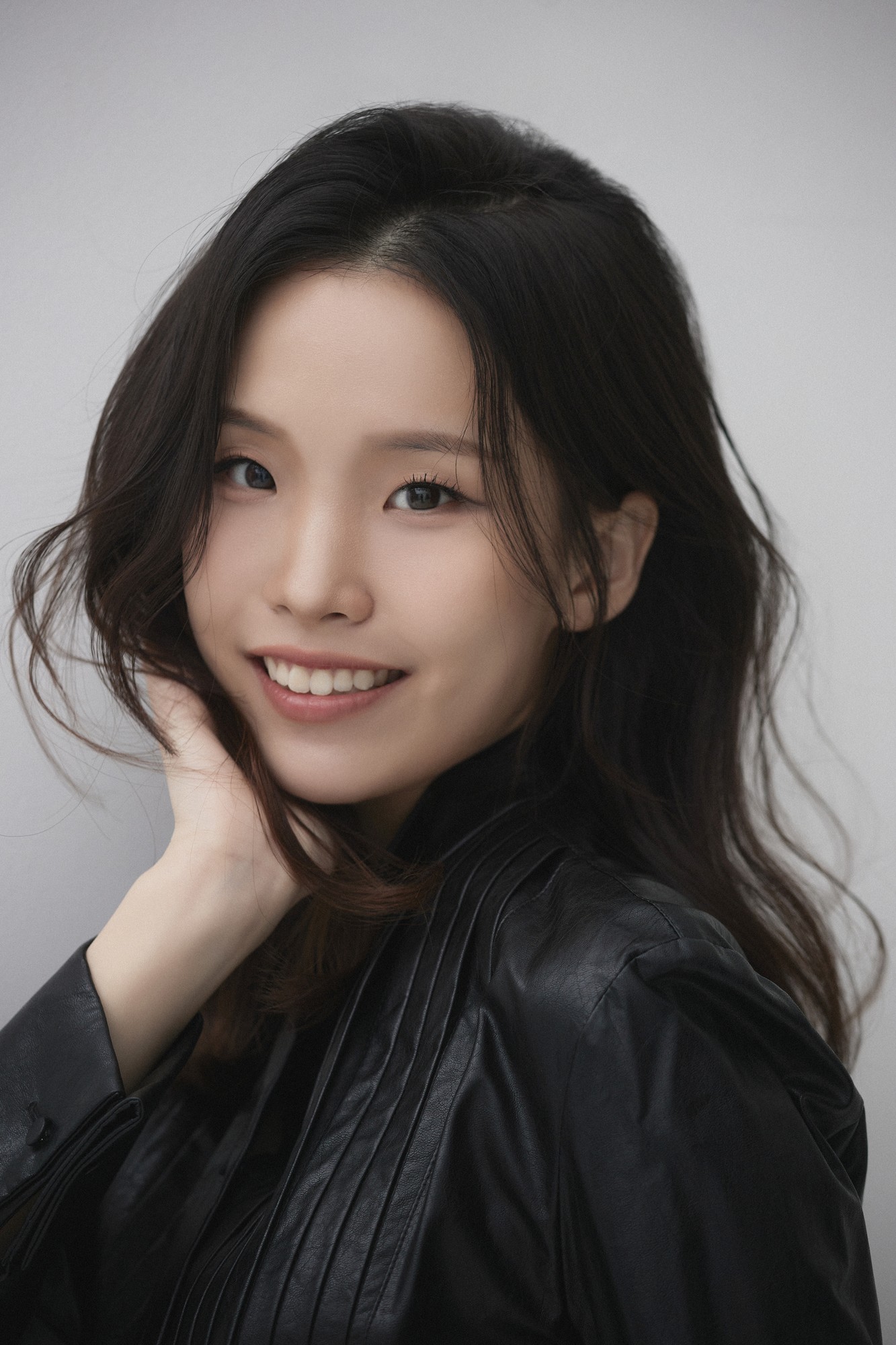
JungAh Lee (b. 2001) is a composer based in Seoul and Chicago. Her 2025 portrait concert sense-stimulus, supported by Arts Council Korea, drew together recent work concerned with sound and experience. She has presented work at the MISE-EN Festival, Darmstädter Ferienkurse, TIMF Academy, highSCORE Festival, and New Music on the Point.
Across Austria, Germany, Italy, Korea, and the United States, her music has been performed by Ensemble Modern, Ensemble TIMF, mdi Ensemble, Ensemble MISE-EN, violinist Chris Otto, bassist Szymon Marciniak, mdw contemporary music ensemble, and METALISM, among others. Major works include mini-opera Ant Stopped, awakening for violin and electroacoustic sound, and string quartet Line of Sight. Her practice extends into theater and interdisciplinary performance, including Project Yonggung: Mystery of Paradise, Vampire in a Box, and Accanto Sinawi, in roles spanning composer, director, and assistant. In parallel, she maintains an ongoing interest in recontextualizing the gestures and instrumental characters of Korean traditional music. This exploration has evolved through close collaboration with Gugak performers at venues such as Mullae Art Space, Stage Black, and Yeongdeungpo Art Hall.
Lee holds a B.M. (’23, summa cum laude) and M.M. (’25) in composition from Seoul National University, where she studied with Shinuh Lee and Uzong Choe and was a GSI fellow. She received her master’s degree with the thesis Flexibility of Rhythm in Contemporary Music after 1950: Notational Consequences of Aesthetic Choices. Lee is currently pursuing a Ph.D. in Composition and Sound Practices at the University of Chicago, supported by the Division of the Arts & Humanities Fellowship.
I find the nature of mixed ensembles to be a collective of soloists. This piece explores the timbral and functional possibilities emerging from the heterogeneity of instruments, while simultaneously crafting a larger musical narrative as an ensemble. At a larger scale, abstract and ambiguous characters gradually shape into clearer and more linear contours. Along the way, the music articulates relations between continuity and break, broad coalescence and minute gestures, much like a comma that regulates the flow of sentences between connection and pause.
TIMF Foundation
Recording
Excerpt 10:00
Excerpt 20:00
Premiere
September 11, 2025. Tongyeong Concert Hall. Ensemble Modern & Ensemble TIMF.
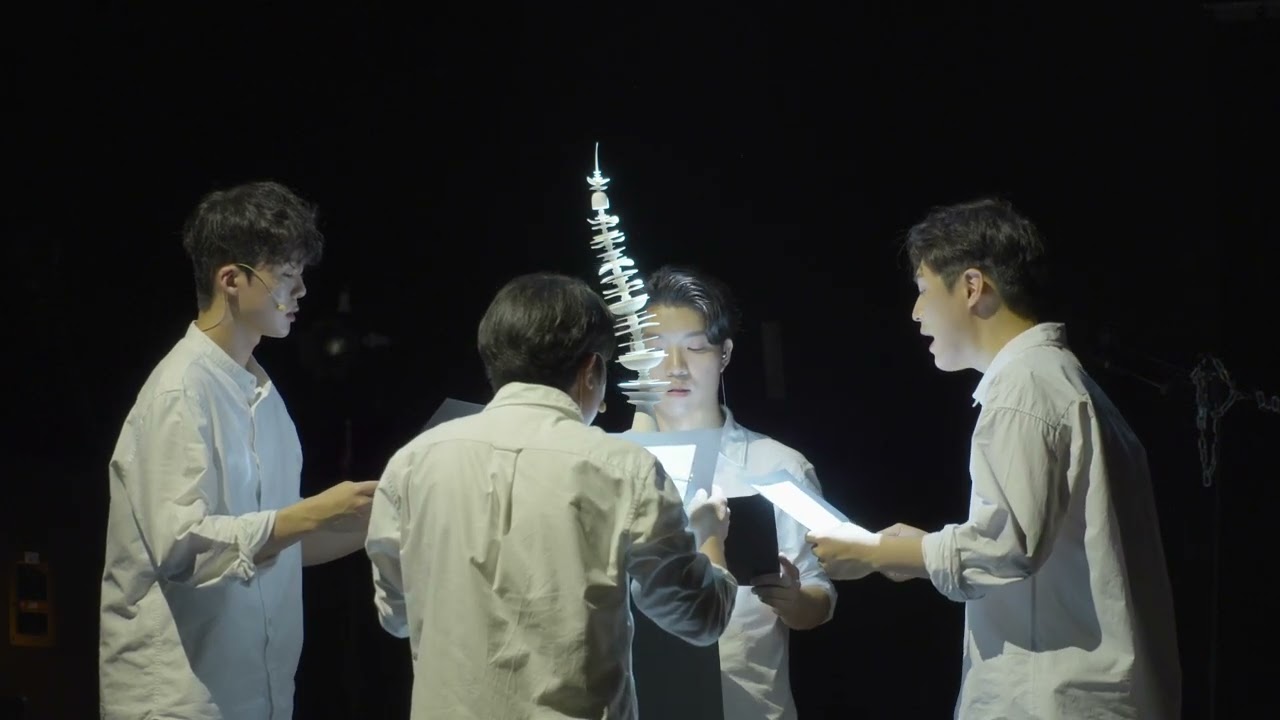
24-pipe saenghwang (sheng), 4 amateur male voices with reverb effect
SONG-SONG: Recessional is a work that reconstructs Songshin (송신, 送信), the ninth sequence of the Korean traditional ritual Yeongsungbinari, through subjective interpretation. This piece contemplates the meaning inherent in the act of “sending” from the consciousness connected to memory, using very small voices as its material. Affricates flowing out like whispers, friction sounds of air, and a few simple syllables gradually fade away within the overall resonance. Each sound may be too small to be heard individually, but when layered and overlapped, they form a texture that cannot be produced by a single instrument or person. The result goes beyond its meaning as a collection of sounds, embodying the act of Songshin by constructing a space of consciousness based on accumulated memories and sensations.
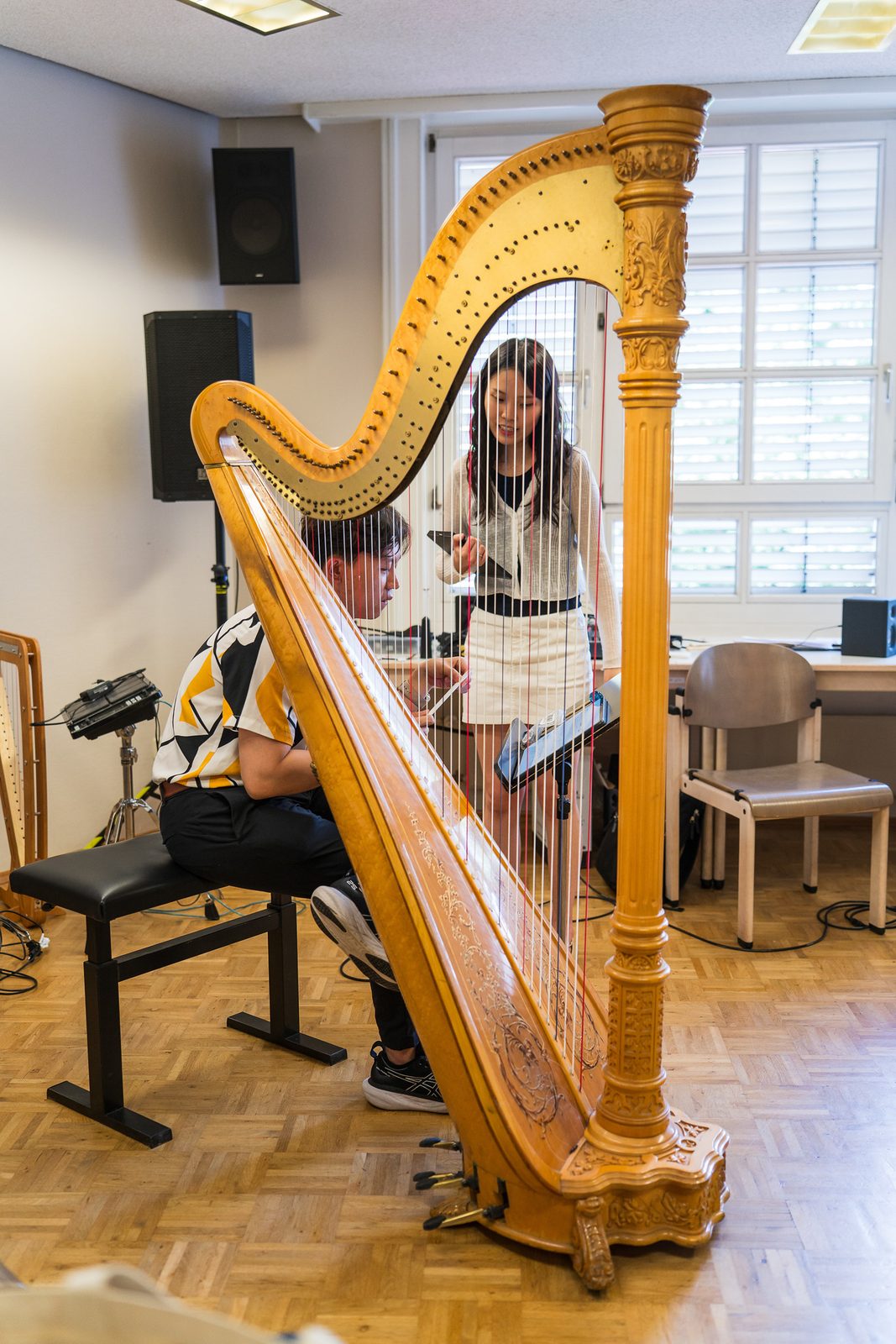
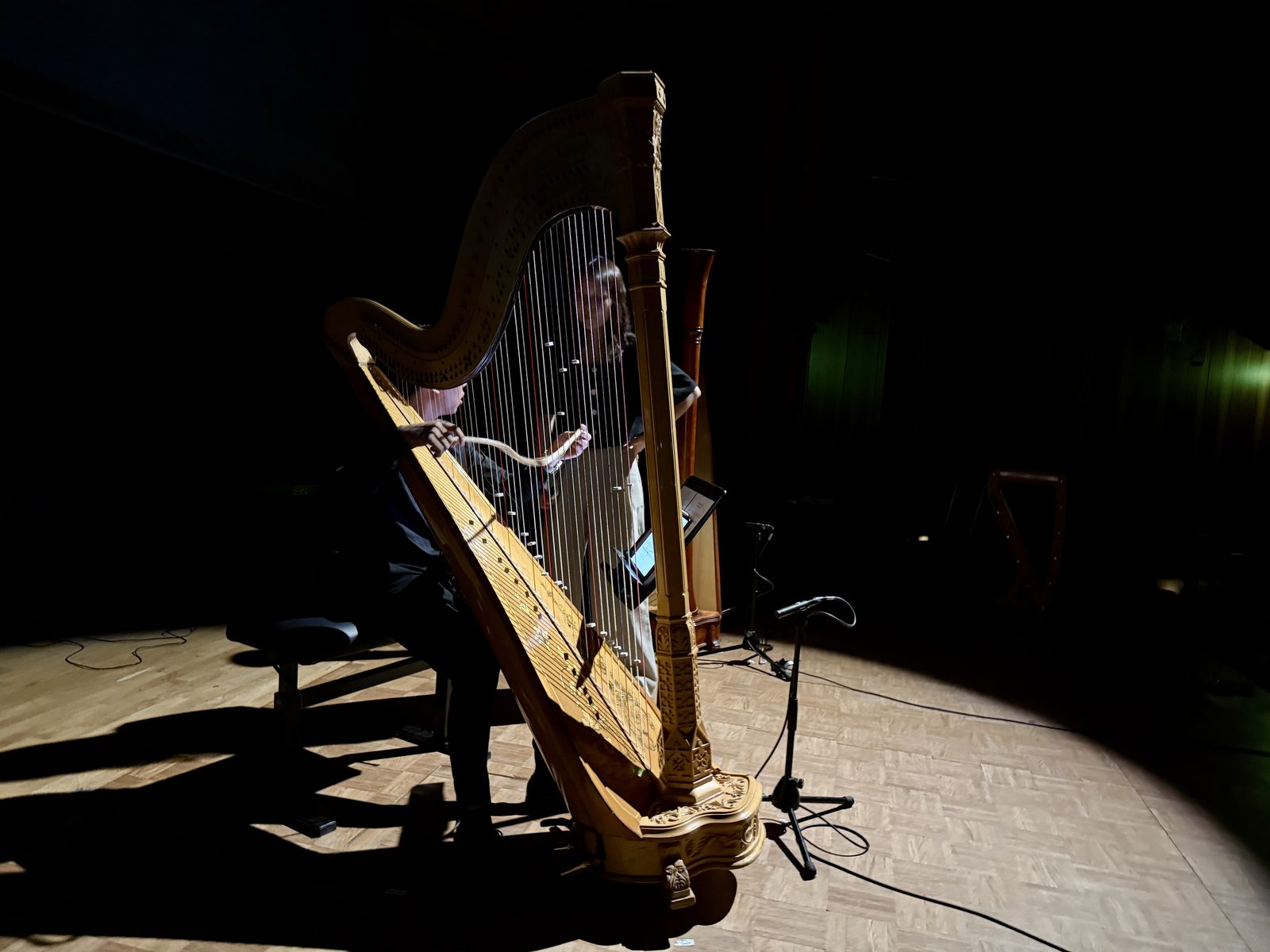
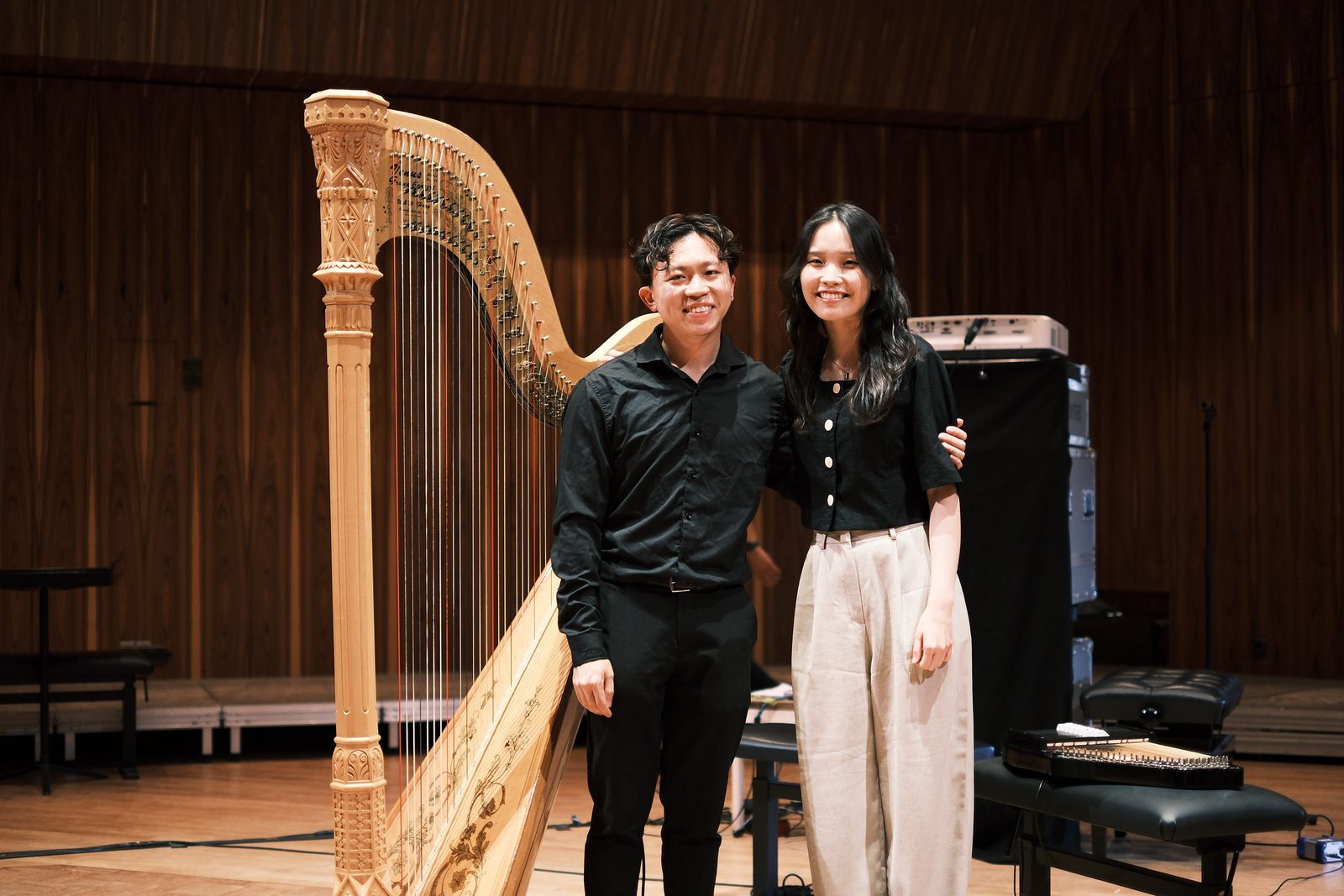
strata is the result of five days of close collaboration with harpist Ian Lim. We attached, inserted, rubbed, and scraped everyday objects of various shapes and materials on the harp, exploring a variety of sounds.
Many of the sounds were fascinating. Yet, what inspired me the most was the instrument’s fundamental mechanism. The harp has a large soundbox, and when its strings are plucked, each string has its own independent duration of resonance. As the strings are exposed, the performer can control a broad range of dynamics. I selected several sounds with distinct qualities and arranged them in a somewhat raw manner, letting them gradually accumulate and grow into a vast sonic presence. To allow each sound to unfold naturally, I avoided metrical constraints, instead choosing proportional spacing for freer temporal flow. Like a snowball rolling and gathering mass, the sound acquires tremendous force, and it is at this point that the harpist’s voice enters.
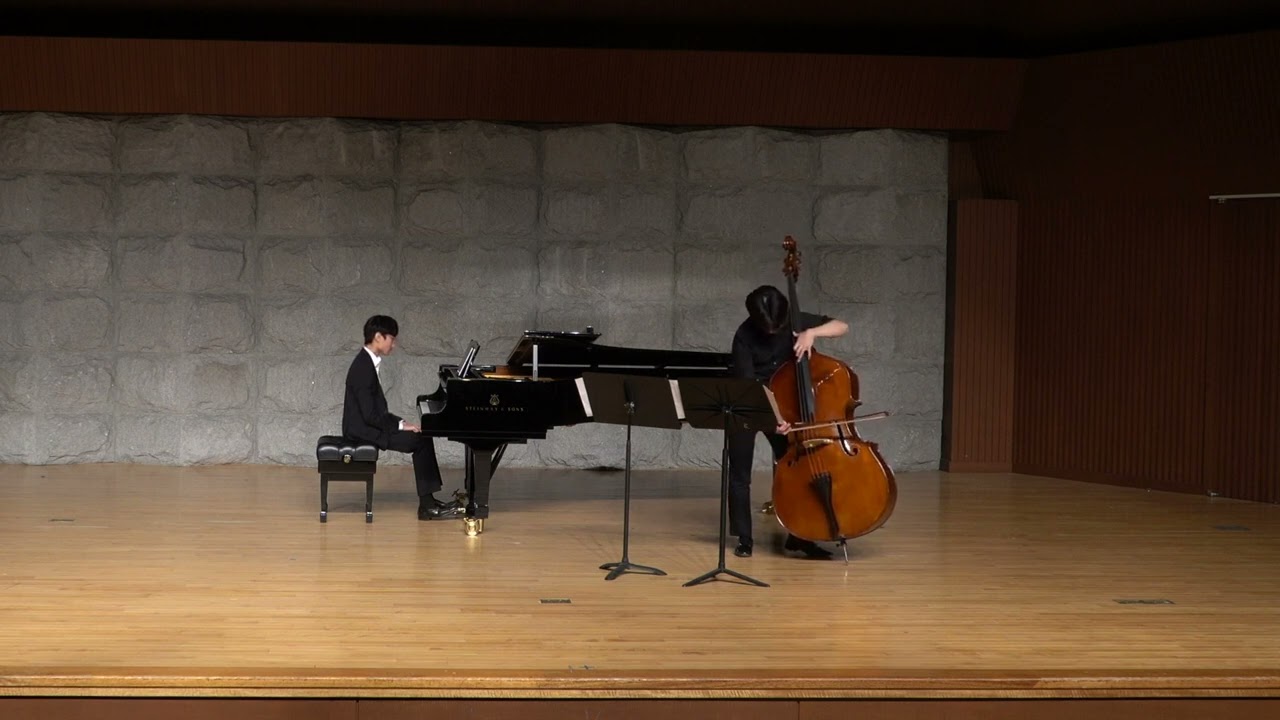
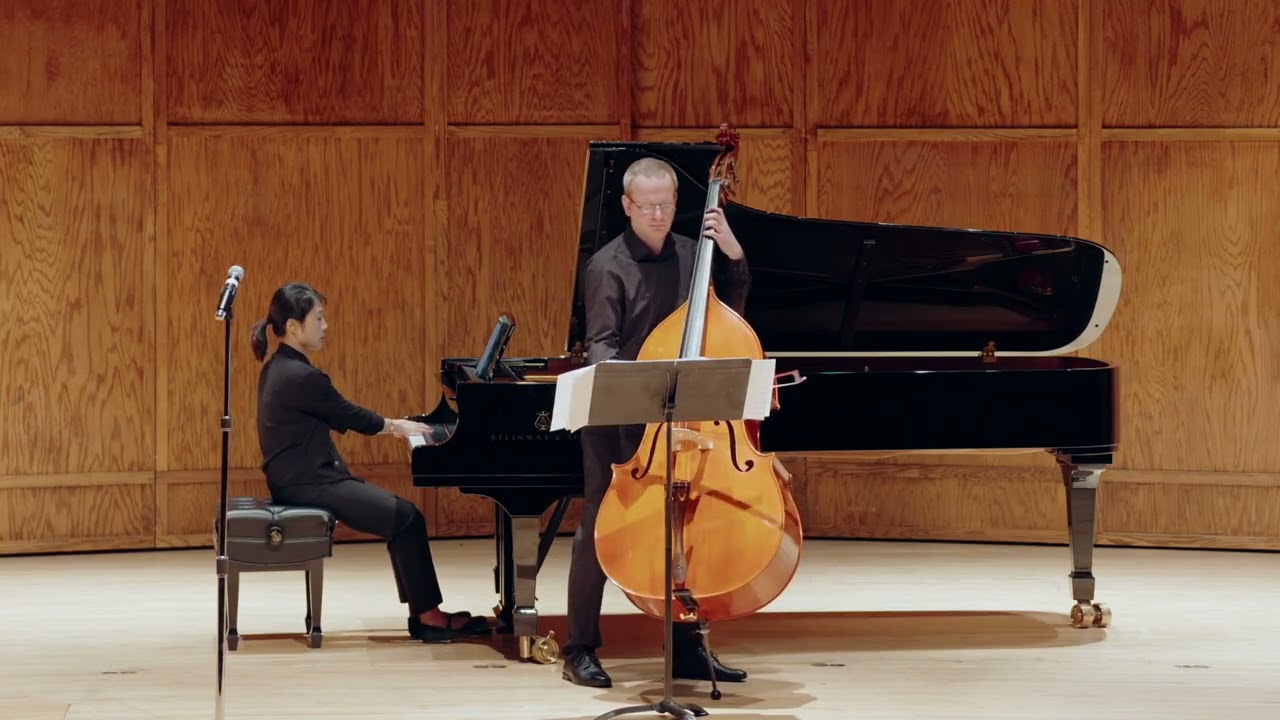
Voice has been crucial in my work. Vocalize for double bass and piano (2022) was my first instrumental piece with a vocal passage consisting only of vowels, performed by the double bass player alongside the instrument's harmonics. The context in which voice is used in strata is similar in that the performer speaks without words. In this piece, not only the performer's and the harp's bodies but also the sounds they produce are brought much closer. The dimensionality created through layered accumulation gains vitality with the performer’s breath, and it propels toward an explosive climax. The simple tool I chose to blur the difference between sounds produced by the instrument and those by the voice serves to illuminate the nuance of this transformation.
The overall concept of the piece reminded me of layers of earth forming over time, slowly built through successive natural processes.
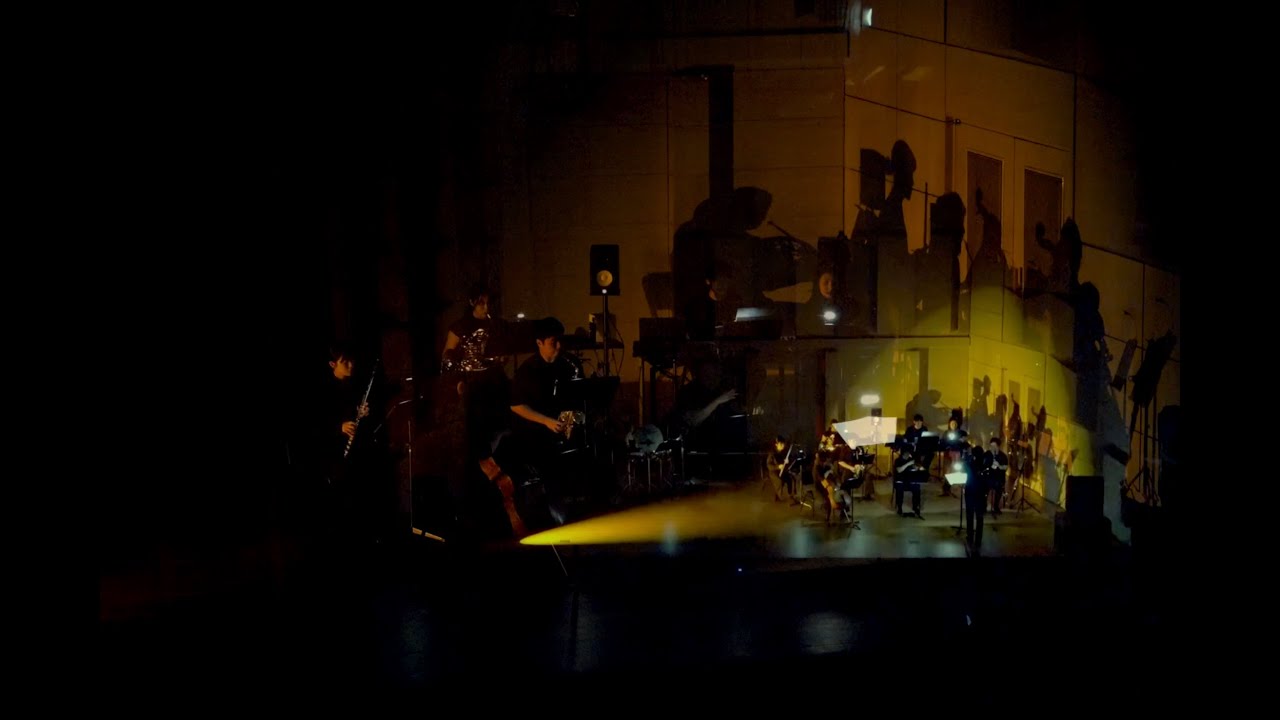
The mini-opera Ant Stopped is inspired by I-Chae, a character from Korean writer Yeonwoo Jung’s short story A Genealogy of a Certain Screen. I-Chae is sensitive and easily startled. After her death, she comes to watch the daily lives of others behind a screen, seeing everything with an omniscient viewpoint. She follows the lead of someone next to her who constantly laughs and mocks whatever appears on the screen. Her own way of looking gradually becomes tinged with similar mockery and cynicism. Still, unexpected moments stir up old emotions she hadn’t anticipated.
I-Chae slowly realizes that seeing isn’t just passive observation, but also can be a form of connection and engagement with the world.
In the original text, the “ant column story” appears as a childhood episode where I-Chae first becomes aware of how she looks at the world. I felt this short scene captured not only I-Chae’s inner world but also the key point of the entire story. Ant Stopped draws on this ant metaphor and carries the belief that attention and respect for individual existence, values we tend to overlook, can be the thread that helps us begin again.
We are all the ones who pick up ants, turn them around, drop them, or crush them. We are also the small ant that gets left behind, stopped in the middle of the column. This work suggests that our engagement with the world shouldn’t stop at observation and judgment, but should develop into a way of seeing others as whole beings. In a world full of anxiety, perhaps we can turn our attention to people who move through life like ants, and quietly focus on the one who has stopped.
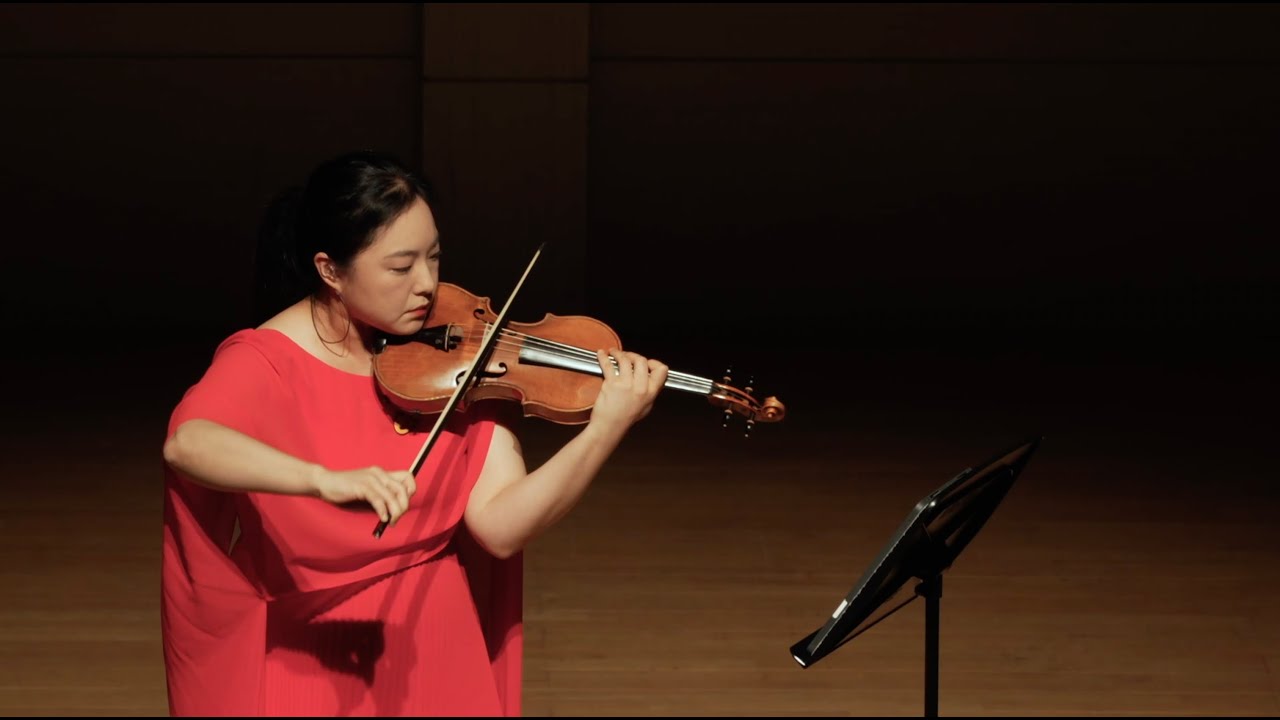
awakening draws from the affinities between environmental sound and acoustic instruments. This idea is manifested through a subtle use of electronics, blurring the boundaries so that the distinction between violin and electroacoustic sound becomes ambiguous. The violin’s fragile harmonics remind me of the purity of birdsong. By overlapping the violin’s fourth octave and birdsong sharing frequencies in the 2,000-4,000Hz range, I found a subtle convergence of the natural and crafted, opening a liminal space where sound feels weightless and ethereal. awakening is my recognition of, and tribute to, a quiet principle underlying creation. To be, to weather, and to awaken feels to me like a thread linking all that exists.
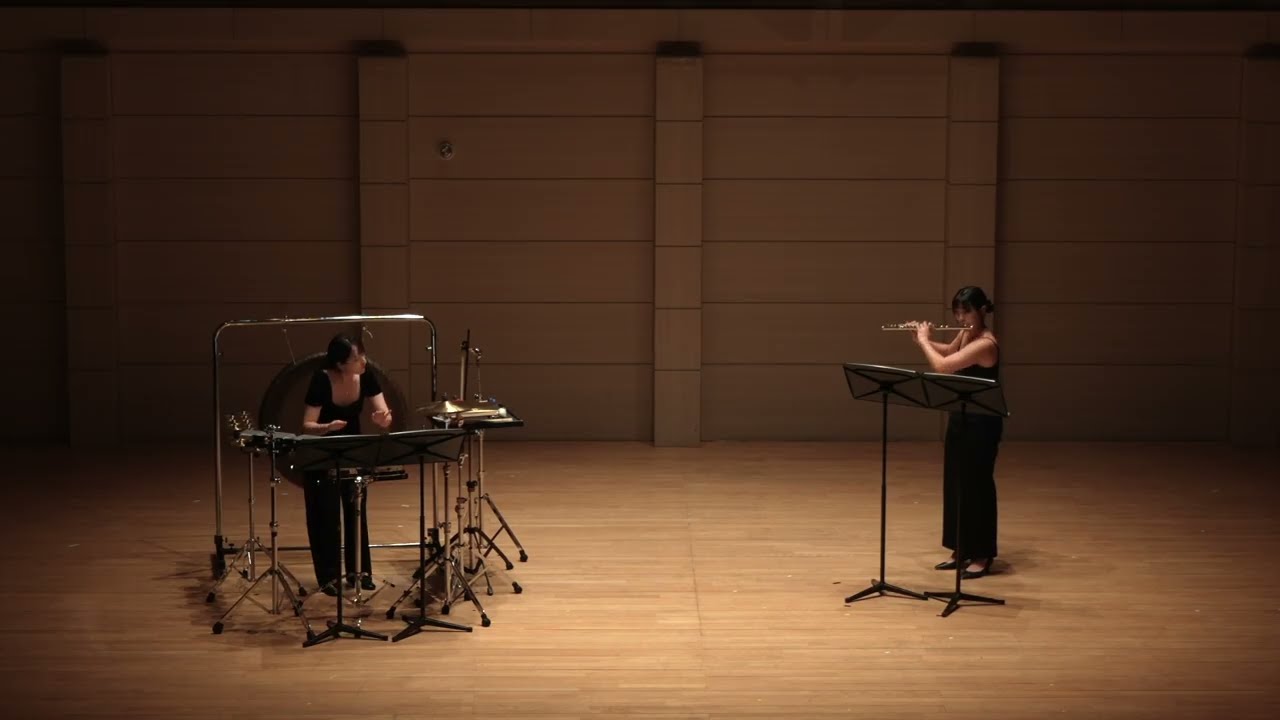
flute and percussionPercussion: 5 temple blocks, 2 suspended cymbals, 1 large tam-tam, 1 set of bongos, crotales
intatto takes its title from the Italian word meaning ‘intact.’ The piece centers on the materiality of the flute and percussion, approaching sound through their tactile qualities. The 2025 revision focuses on spaciousness, creating more space in the latter part of the work for sounds to breathe and resonate.
to nowhere… is about a person endlessly running toward an unknown destination. The piece is a mix of stylistically diverse gestures, and the quick transitions between them reflect a tumultuous inner state. Although it is a chamber ensemble piece, there are several short and long solo passages inserted. The chosen ensemble of four instruments is not merely seen through the traditional lens of a ‘piano quartet’; instead, it is sometimes treated as a solo cadenza, sometimes as a dialog between two instruments, and sometimes as a harmonious quartet ensemble. These choices and attempts were made to create structurally interesting flows while aiming for an individualized sound.
I opted for direct expression over beating around the bush. I wanted the sound I made to reach the listener as a tangible reality.
Project 'Yonggung': Mystery of Paradise프로젝트 용궁 : 낙원의 미스테리
2023 · c. 105'
musical in 2 acts
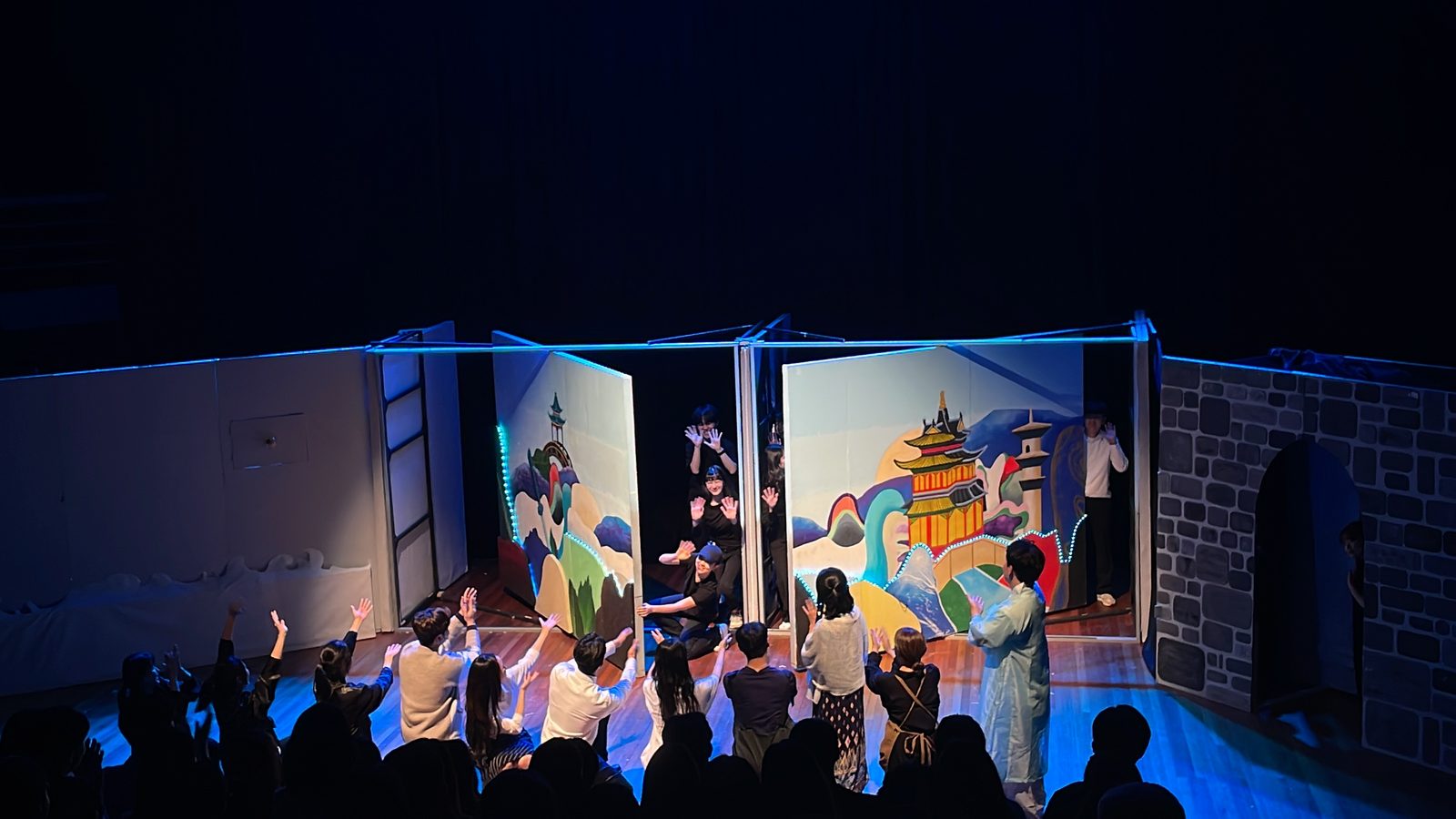
Synopsis: In 2032, the Korean game company XPS makes a groundbreaking achievement by creating artificial intelligence in a game that is indistinguishable from humans. The key figures behind the project game <Yonggung> are Jiwoon, Eunse, and Hyunseo. However, not long after, the project is temporarily halted due to the shocking events of Jiwoon’s suicide and Eunse’s disappearance. Years later, Jiwoon’s sibling, Jaei, receives a mysterious email along with the <Yonggung> game set. The email contains a simple message: if you’re curious about your brother’s death, play the game. Shrouded in the mystery of his brother’s death, Jaei believes that the game <Yonggung> holds the only clue. After much deliberation, Jaei dives into the unknown world of Yonggung, wondering who will be at the end of this journey.
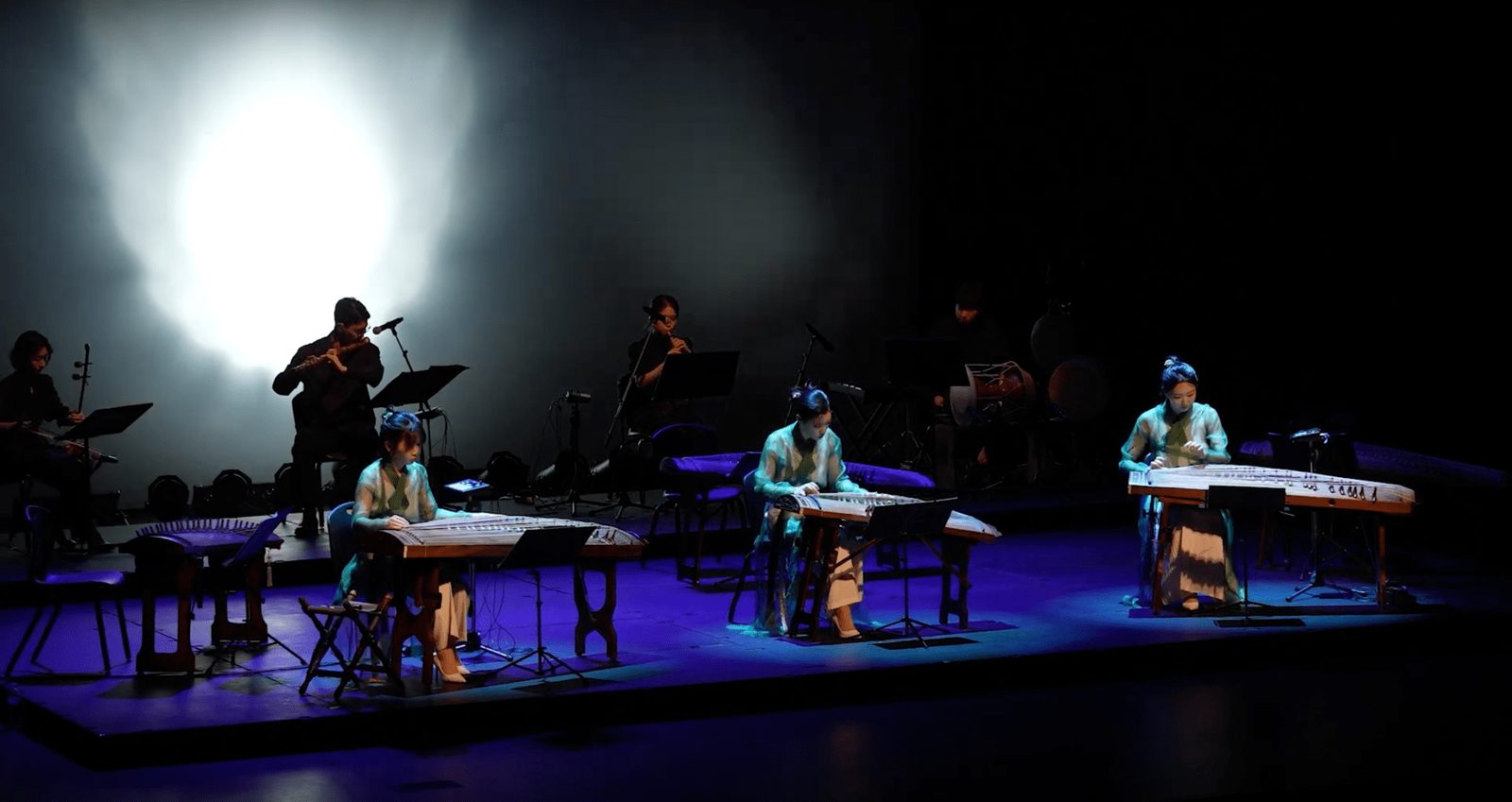
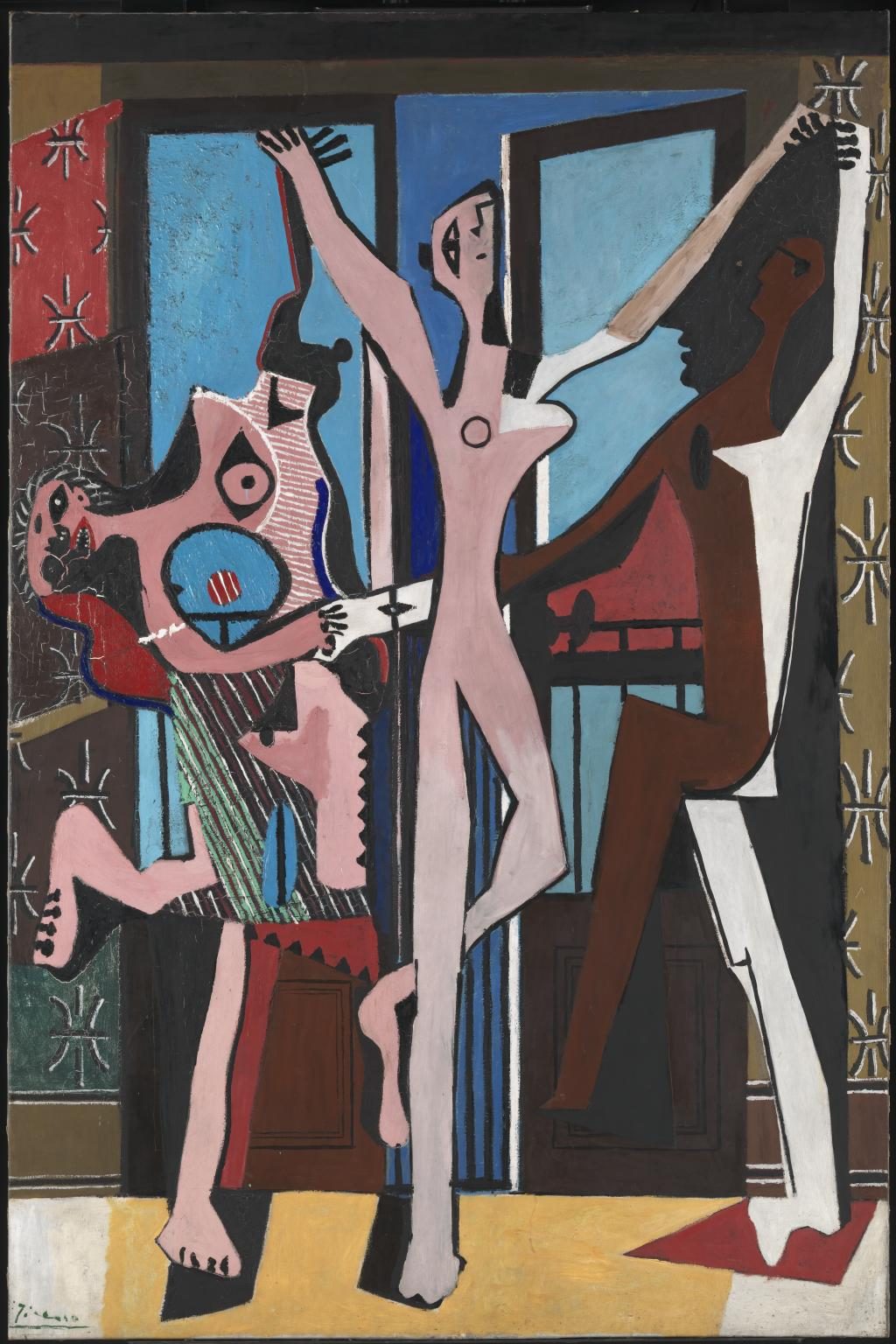
The piece is based on Pablo Picasso’s oil painting The Three Dancers (1925), which tells the tragic story of two of his closest friends and shows the influence of the Surrealist school of thought that the artist was immersed in at the time. Whereas Picasso projected his chaotic unconscious through illogical arrangement and bold visual choices, for this piece, I wanted to create a primal atmosphere with a vivid, distinct timbre of Korean instruments. I paid particular attention to maximizing the uniqueness of the GMG Gayageum and blending these sounds with other voices, especially the tambourine, a traditional percussion instrument from Picasso’s native Spain.
Pablo Picasso, The Three Dancers (1925).
Premiere
July 8, 2023. Yeongdeungpo Art Hall. Gayageum Ensemble Odrey.
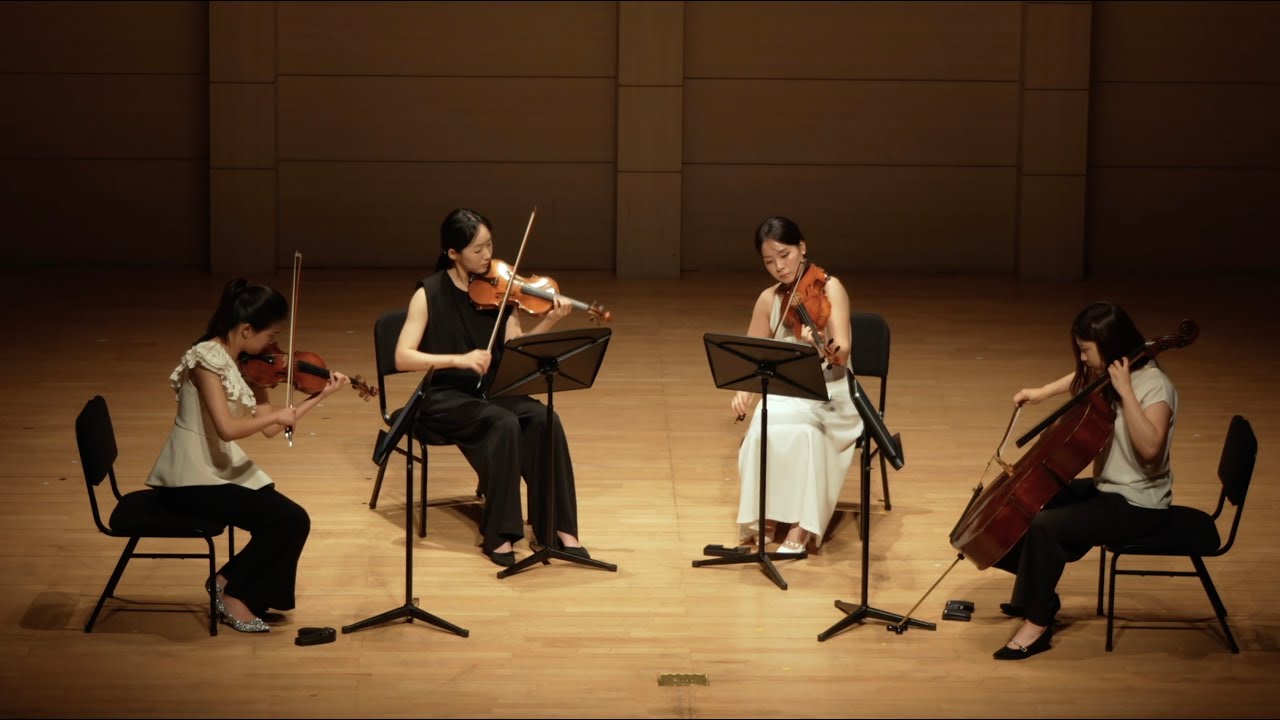
I developed this observation into music, crafting relationships between glissandi and quarter-tones to capture these delicate movements, envisioning a space emerging from these fragile lines of sight.
The title ‘vocalize’ means the act of speaking or pronouncing. We express ourselves through our voices, not just with words but also with sighs, sobs, hums, and various other methods. These expressions, even with their subtle differences, can convey varied meanings. It is a very sensitive and delicate process. With two instruments that offer a wide range of expression, this piece captures these various emotional nuances in music.
On June 17, 2022, the Six Humans concert introduced new works composed after visiting Turing Test – AI’s Confession of Love at the Seoul National University Museum of Art and selecting one of their favorite works from the exhibition. The overall theme of the concert was “two contrasting elements and the spectrum between them,” and it was intended to further contemplate human lives in this era of living alongside machines and artificial intelligence.
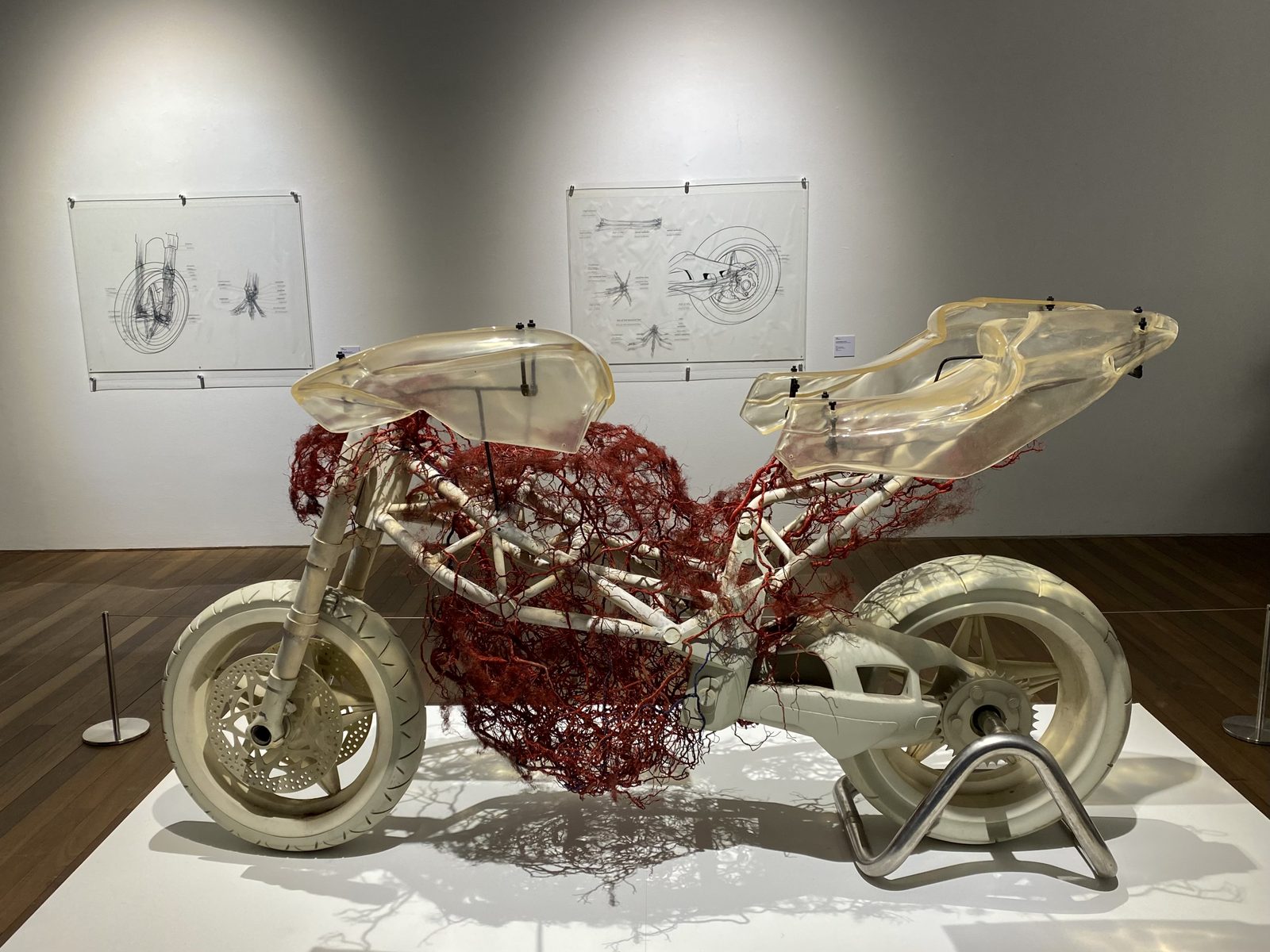
Somewhere between a machine and an animal, Machinimal is a familiar yet bizarre object. Artist Dong-yeol Lim (1979-) puts a question mark on sedimented ideas about machines by suggesting a new form based on the similarities and differences between machines and organisms.
However, to me, Machinimal is still a machine, because it is dead from the beginning.
Although there are some musical elements that symbolize vitality (such as concentrated strings and curvilinear movements), I wanted to evoke the rigidity and awkwardness of Machinimal as a ‘machine’.
<Cube> for String Quartet and Percussion was inspired by the geometric image of a cube. The idea of molecules colliding and floating in three-dimensional space inside the cube is translated into a musical gesture.